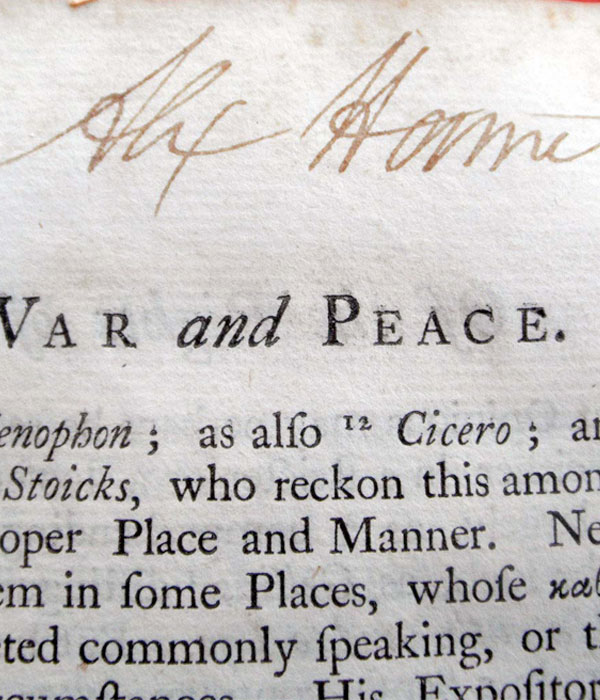
Signatures
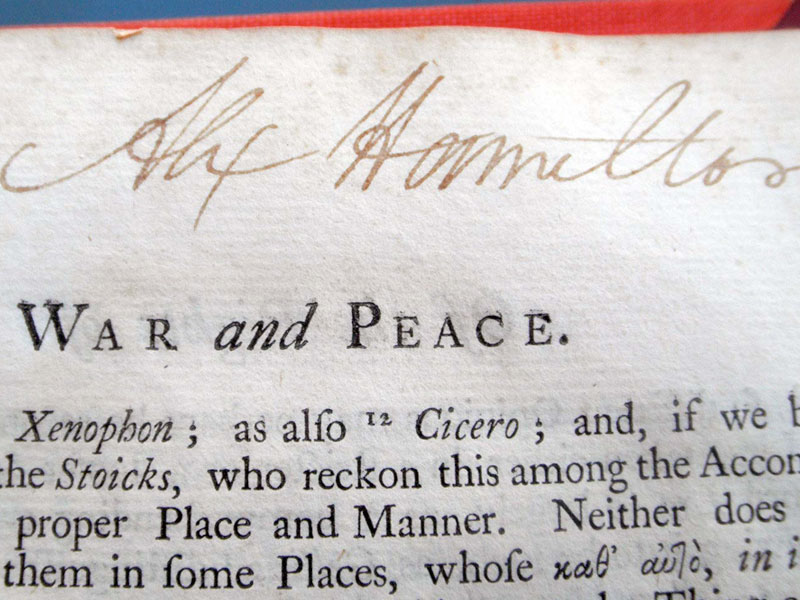
Personal markings and inscriptions help connect the volume to Hamilton’s ownership and study.
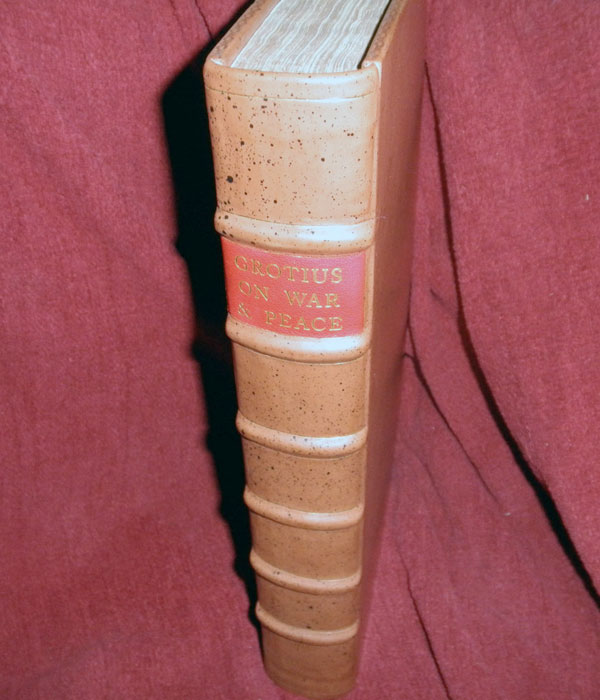
A rare founding-era volume of Hugo Grotius’ The Rights of War and Peace, personally connected to Alexander Hamilton and filled with signatures, markings, watermarks, and historical clues.

Grotius’ work helped shape ideas about natural law, war, diplomacy, sovereignty, and justice. In Hamilton’s hands, this volume becomes more than a historic book. It becomes evidence of how deeply the founding generation studied the legal and philosophical questions behind a new nation.
Grotius’ writings on natural law and the laws of war had a profound influence on the development of international law, setting the stage for modern diplomacy, governance, and legal reasoning.
His ideas traveled through generations of philosophers, attorneys, statesmen, and political thinkers before shaping conversations across the Atlantic. For Alexander Hamilton, a brilliant legal mind and one of the central figures of the American founding, Grotius’ work belonged to the intellectual world that informed constitutional thinking and early American law.
Within the pages are inscriptions, annotations, watermarks, and cross-references connected to major legal and historical themes, including Rutgers v. Waddington and the Camillus letters.
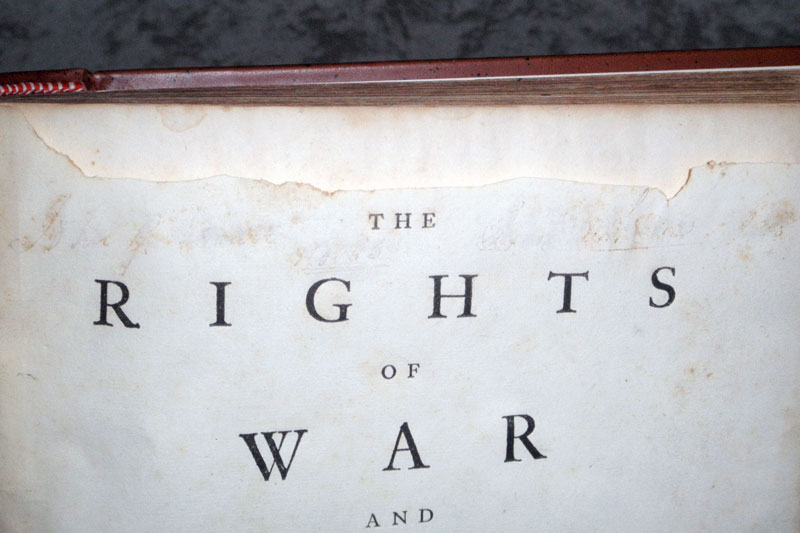
Personal markings and inscriptions help connect the volume to Hamilton’s ownership and study.
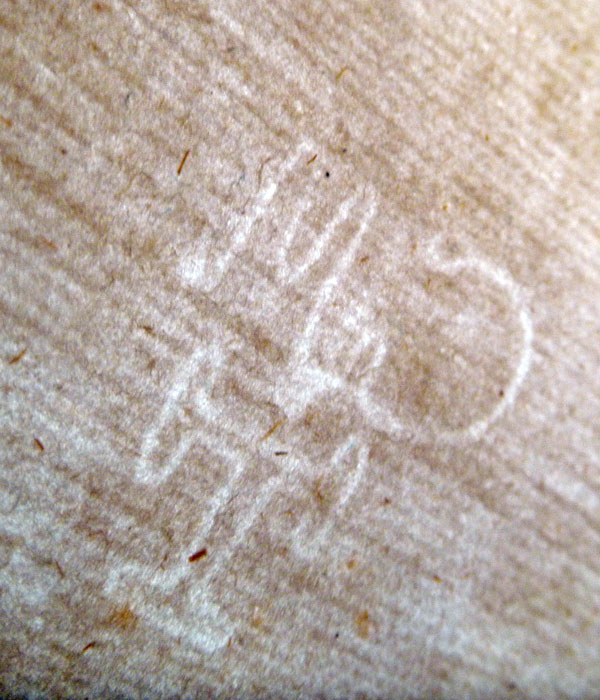
Paper details provide another layer of material evidence and historic character.
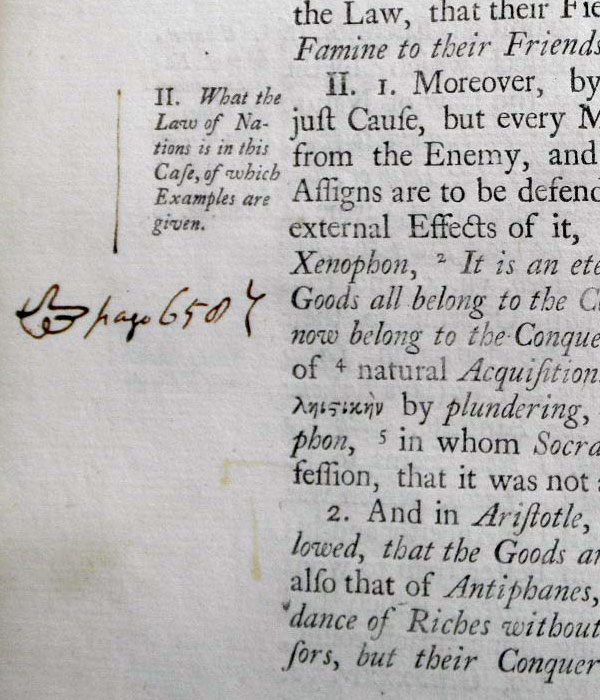
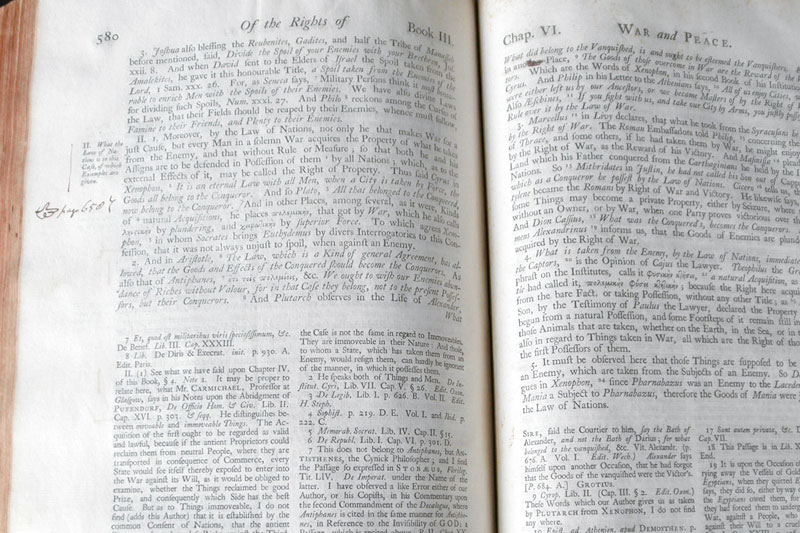
Marked passages and notes reveal close engagement with the legal issues of the time.
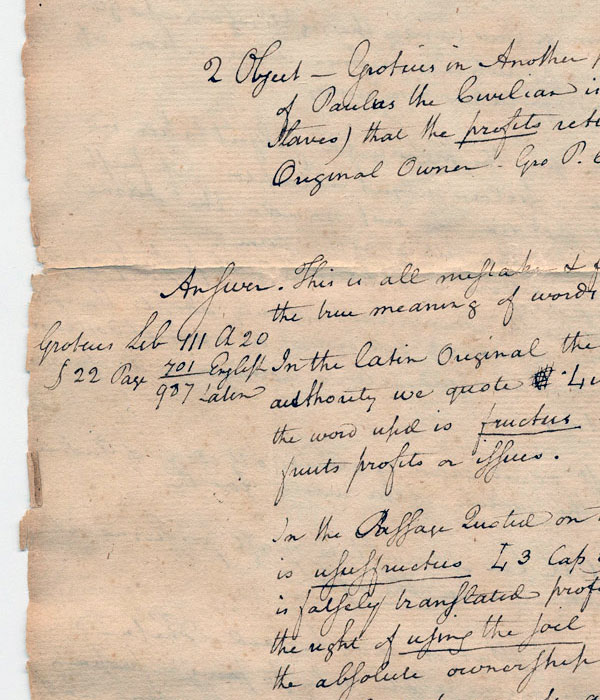
Historical references connect the book to Hamilton’s legal arguments and public writings.
As the United States approaches the 250th anniversary of the Declaration of Independence, Hamilton’s copy of Grotius offers a meaningful way to revisit the legal, moral, and philosophical ideas that shaped the nation’s founding generation.
The book has been shown in respected institutional settings. Continue to monitor this website for information on future showings.
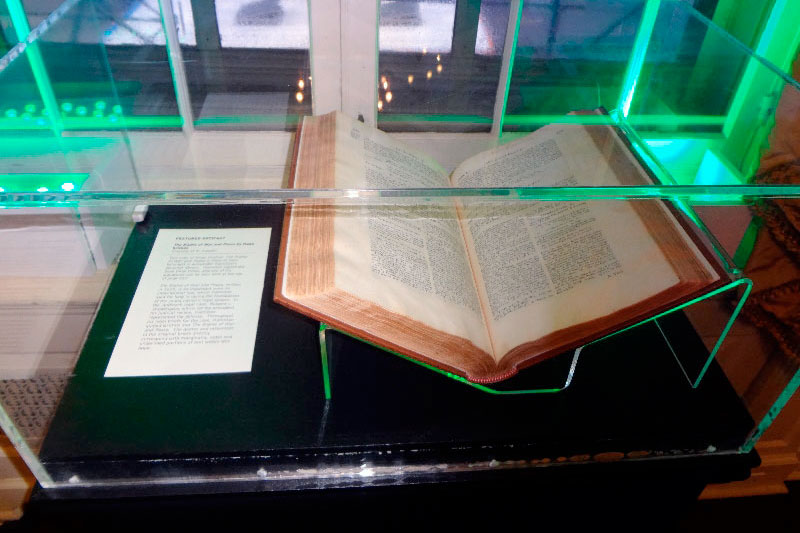

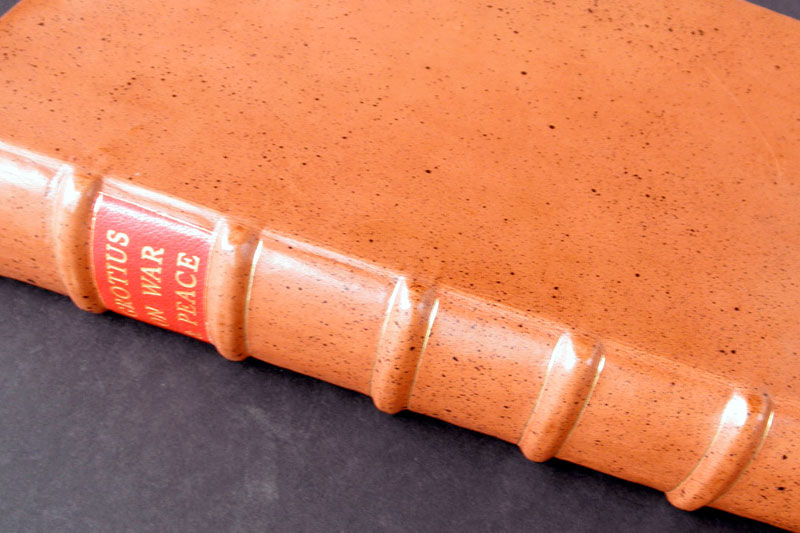
View close-up photographs of the book, its pages, markings, and historic details. Select an image below or visit the full gallery.
Explore the gallery, follow future exhibition updates, or inquire about displaying this remarkable Hamilton-connected volume.